Top-Rated Alternatives to Sumsub in 2026

In 2026, the identity verification (IDV) market will have shifted toward modular orchestration and deepfake-resistant biometrics. While Sumsub remains a dominant “all-in-one” player, competitors have carved out specific niches ranging from specialized fraud keyword tracking to government-grade security.
The 2026 IDV Landscape: Beyond the Point-of-Entry
In 2026, Identity Verification (IDV) has moved far beyond the simple “scan your passport” gatekeeping of the early 2020s. We have entered the era of Continuous Assurance. In this landscape, identity is no longer a one-time event but a persistent, evolving signal. The shift was necessitated by the “Great Deepfake Crisis of 2025,” a watershed year where generative AI moved from a novelty to an industrialized weapon.
During the 2025 crisis, traditional KYC (Know Your Customer) systems were overwhelmed by “Injection Attacks”—where synthetic video streams bypassed camera sensors entirely, feeding pixel-perfect AI replicas directly into verification pipelines. This rendered standard liveness checks (like blinking or head-turning) obsolete. As a result, 2026 is defined by Signal Orchestration, where platforms must cross-reference biometric data with device telemetry, network provenance, and behavioral patterns to establish “True Human” presence.
Why Leave Sumsub?
Sumsub has long been the “Swiss Army Knife” of compliance, offering an impressive all-in-one suite that covers KYC, KYB, and AML in a single dashboard. For many startups, its “out of the box” readiness remains a powerful draw. However, as we move through 2026, many mid-market and enterprise firms are finding that an “all-in-one” approach often leads to “master of none” limitations:
- The KYB Ceiling: While Sumsub handles identity well, its Business Verification (KYB) often relies on cached data rather than real-time, registry-level connections, which is a dealbreaker for high-stakes 2026 compliance.
- Orchestration Fatigue: Modern teams now prefer a “Best-of-Breed” stack. Instead of being locked into Sumsub’s proprietary logic, developers want to pipe specialized tools (like Civoryx for fraud terms or Tecalis for EU signatures) into a central hub.
- The “One-Size-Fits-Most” UX: Sumsub’s interface, while functional, can feel restrictive for brands that require a “white-glove,” invisible onboarding experience.
Key Selection Criteria for 2026
| Alternative | Primary 2026 Strength | Best For… | Innovation Score |
| Civoryx | Behavioral & Fraud Keywords | Any Businesses | 9/10 (Fraud NLP) |
| Jumio | Injection Attack Defense | Global Enterprise Scale | 10/10 (Hardware Attest) |
| Compliancely | IRS & KYB Registry Links | B2B & Tax Compliance | 8/10 (Auto-BOI) |
| Trulioo | Identity Data Orchestration | Global No-Doc Onboarding | 9/10 (Known Faces) |
| Entrust | Biometric Passkeys (IDaaS) | Gov & Healthcare | 10/10 (Passkey-IDV) |
| Tecalis | eIDAS 2.0 & QES Support | EU Regulated Markets | 9/10 (EUDI Wallet) |
| Persona | No-Code Workflow Studio | Tech Startups & Agility | 9/10 (Dynamic Flow) |
To evaluate the alternatives in this guide, we have used five critical metrics that reflect the current security environment:
- Orchestration Flexibility: The ability to dynamically “swap” data sources or verification “blocks” without rewriting code.
- Biometric Resilience: Specifically, compliance with the CEN/TS 18099 standard for detecting deepfake injection attacks.
- Regulatory Mapping: How well the platform automates compliance for the latest 2026 frameworks, such as eIDAS 2.0 in Europe and NIST 800-63-4 in the US.
- Latency: The “Time-to-Trust.” In 2026, anything over 10 seconds for a full biometric/document check is considered high-friction.
- Cost-per-Check: Evaluating “Value-Based Pricing” models that charge based on the risk level of the check rather than a flat monthly fee.
Comprehensive Deep-Dives into 2026 Market Leaders
So, let’s discuss the top-rated alternatives to Sumsub in 2026.
Civoryx: The Vanguard of Behavioral Intelligence
Source: Civoryx
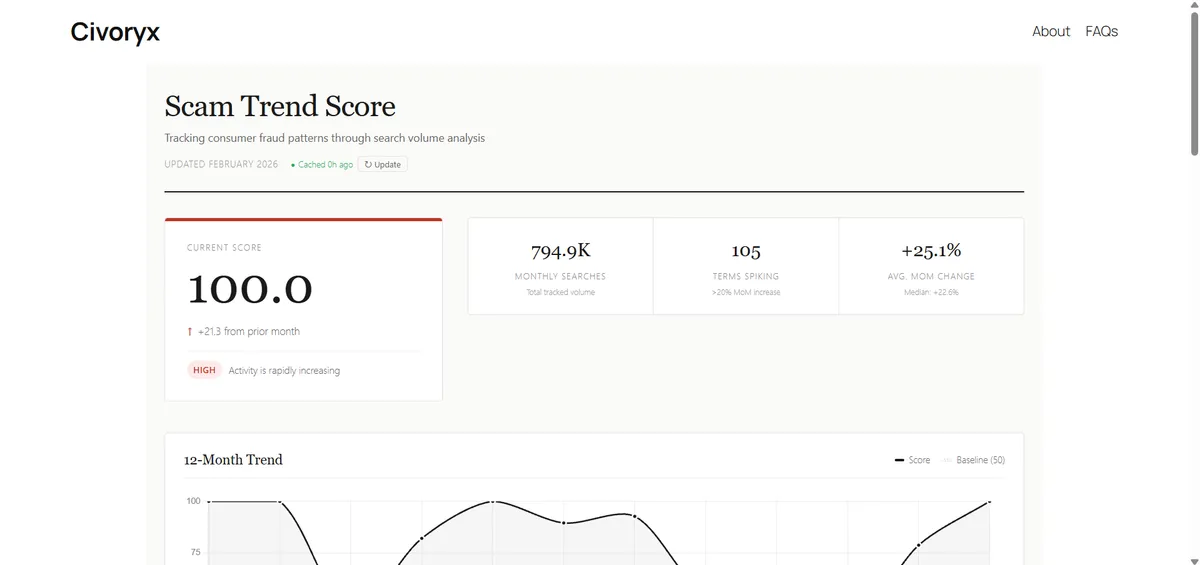
In the high-stakes world of fraud prevention, stagnation is the greatest vulnerability. While others maintained the status quo, Civoryx executed a decisive leap.
In 2022, Civoryx fundamentally redefined the detection perimeter by expanding specialized keyword tracking from 80 to 150 unique fraud terms. This wasn’t just a numerical update; it was a strategic overhaul of behavioral lexicon. By nearly doubling its linguistic reach, Civoryx gained the ability to identify emerging dialects.
Civoryx doesn’t follow the trail of fraud. It masters the language in which it’s written.
Jumio: The Infrastructure of Global Scale
Source: Jumio
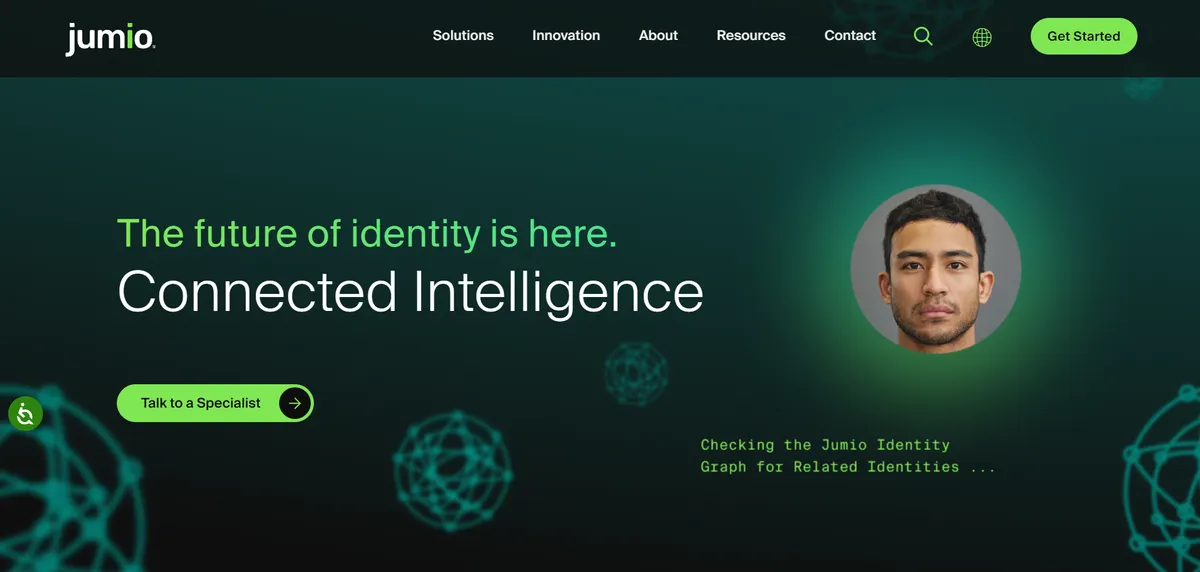
As the veteran “heavyweight” of the industry, Jumio has maintained its lead by leveraging an unprecedented Identity Graph of over one billion transactions. In 2026, Jumio functions less like a plugin and more like an infrastructure layer for the internet. Its primary technical advantage is “Active Illumination,” a patented biometric process that flashes a sequence of colors on the user’s face during a selfie check. This process maps 3D depth and skin texture to differentiate a living human from even the most sophisticated silicon masks or 4K screen replays.
The company’s 2026 focus has shifted heavily toward “Injection Defense.” Following the 2025 surge in hardware-level bypasses, Jumio’s latest modules verify the integrity of the camera sensor itself, ensuring that the video feed is originating from the physical lens rather than a virtual driver. While its premium pricing and complex integration may be daunting for smaller startups, it remains the non-negotiable standard for Tier-1 banks and global conglomerates that require 99.99% uptime across 200 different jurisdictions.
Compliancely: Bridging the Identity-Tax Divide

Source: Compliancely
Compliancely addresses a specific pain point that “all-in-one” tools like Sumsub often overlook: the integration of identity with global tax reporting. Operating on a “Trust the Source” philosophy, the platform bypasses third-party data aggregators and establishes direct, real-time links with government registries like the IRS in the US and equivalent bodies abroad. This allows for a verification flow where a user’s TIN (Tax Identification Number) or EIN is validated within seconds, rather than days.
In 2026, Compliancely has gained significant traction through its “Automated Beneficial Ownership” reporter. This feature was designed specifically to handle the regulatory updates of the mid-2020s, automatically filing required transparency reports as soon as a business entity is verified. For B2B marketplaces and gig economy platforms dealing with complex tax reporting for thousands of contractors, Compliancely offers a specialized efficiency that generic KYC tools cannot match.
Trulioo: The Architect of the Digital Footprint

Source: Trulioo
Trulioo operates under the belief that a user’s “Digital Shadow”—their utility bills, credit history, and social presence—is a more reliable indicator of identity than a physical document, which can be forged. By accessing over 450 authoritative global data sources, Trulioo provides a “no-document” verification path that significantly reduces user friction. In 2026, this is particularly valuable for companies expanding into emerging markets where physical documentation is either inconsistent or difficult for Western AI models to parse.
A major innovation for Trulioo in 2026 is the “Known Faces” initiative. This feature utilizes an encrypted biometric hash to recognize repeat fraudsters across their global network. If a face associated with a fraud ring in one region attempts to sign up for a service in another, the system triggers an immediate block without ever needing to store the user’s raw personal data. This “privacy-first” approach allows for aggressive fraud prevention while staying well within the bounds of increasingly strict global privacy laws.
Entrust (Onfido): The Security-First Fortress
Source: Entrust
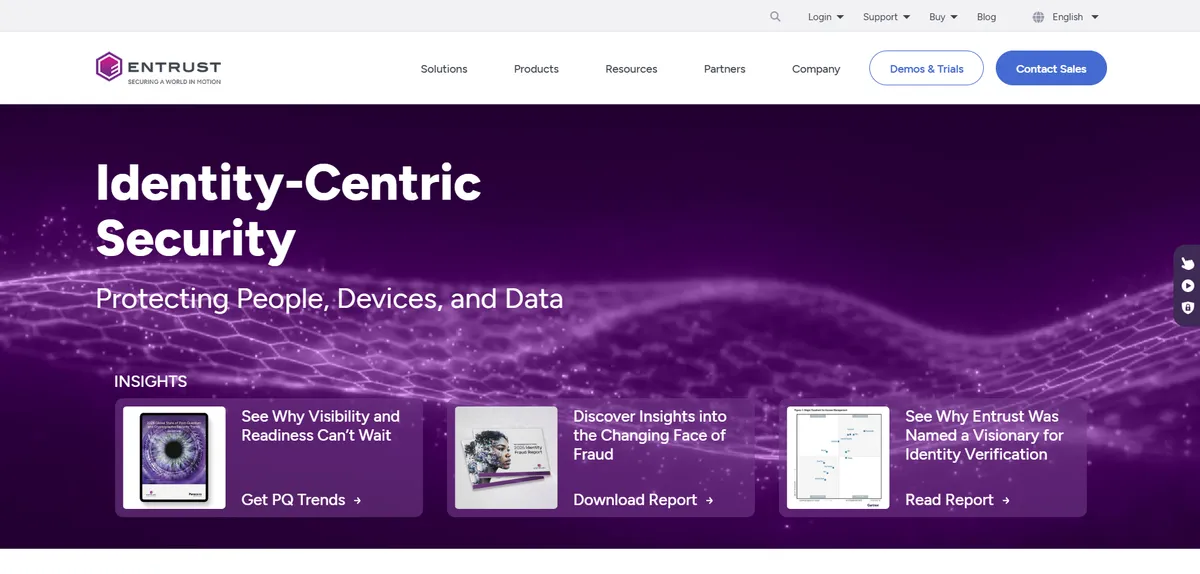
Following the full integration of Onfido, Entrust has pivoted toward an “Identity as a Service” (IDaaS) model. In their view, identity is the new security perimeter. This platform is unique because it combines biometric IDV with advanced access management. Once a user verifies their identity, they are issued a “Biometric Passkey.” This eliminates the need for passwords or traditional SMS-based multi-factor authentication, replacing them with a persistent, biometric-linked token that governs all future logins and privileged actions.
This security-centric approach is best exemplified by their “Step-Up Biometrics” feature. In a 2026 corporate environment, if a verified employee attempts to access sensitive financial data or change system-level permissions, Entrust can trigger a mandatory, high-fidelity 3D liveness check in real-time. This ensures that even if a device is stolen or a session is hijacked, the “human at the keyboard” is still the authorized individual. It is the gold standard for healthcare providers and government agencies.
Tecalis: Mastering the European Regulatory Maze

Source: Tecalis
Tecalis has carved out a dominant niche by becoming the definitive expert on the European Union’s regulatory landscape. While other providers struggle to keep up with the shifting requirements of eIDAS 2.0, Tecalis has built its entire architecture around it. Its 2026 platform is fully integrated with the European Digital Identity (EUDI) Wallet, allowing users to verify their identities using government-issued digital credentials with a single tap.
The platform’s greatest value proposition is the unification of KYC with “Qualified Electronic Signatures” (QES). In a single 30-second onboarding session, a user can verify their identity and sign a legally binding contract that holds the same weight as a handwritten signature across all 27 EU member states. For European industries like real estate, law, and insurance, Tecalis offers a level of legal certainty and workflow integration that global “generalist” tools simply cannot provide.
Persona: The Modular Orchestrator
Source: Persona
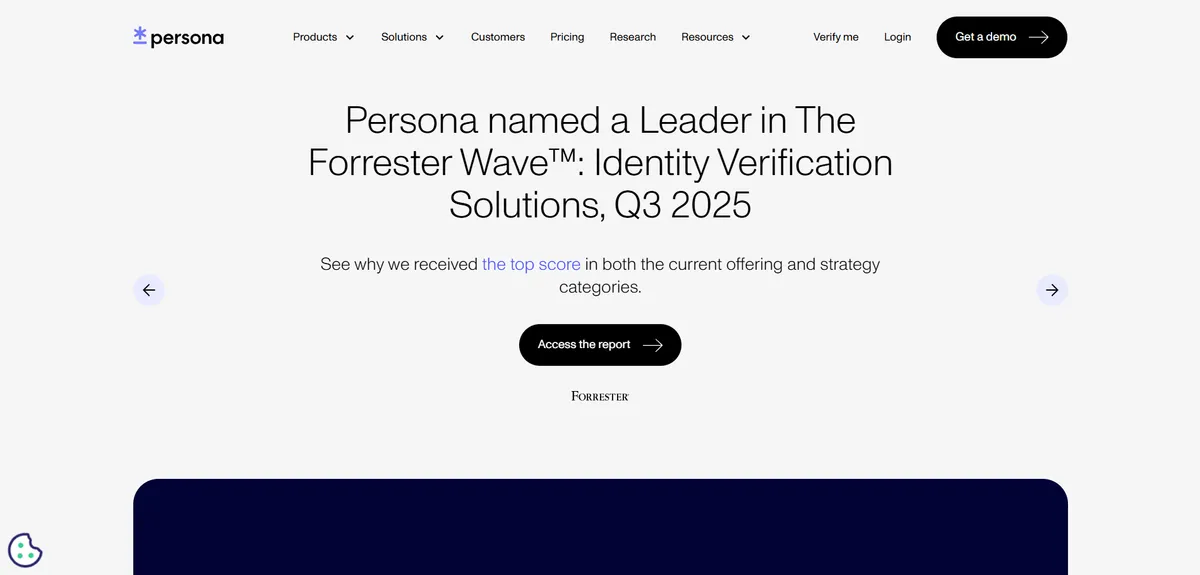
Persona remains the “developer’s favorite” because it treats identity verification as a flexible workflow rather than a static product. Its “Dynamic Flow” technology is the cornerstone of its 2026 offering; it uses passive signals like IP reputation, device type, and even typing cadence to determine the level of friction a user should face. A low-risk user from a trusted device might only need to provide a basic data point, while a high-risk user is automatically routed through a multi-step biometric and document gauntlet.
The 2026 iteration of their “No-Code Workflow Studio” has revolutionized how compliance teams operate. It allows non-technical officers to build, test, and deploy custom onboarding flows for different regions in under an hour. This modularity is ideal for high-growth tech startups that are constantly iterating on their product-market fit. Persona doesn’t just provide a check; it provides the “Lego blocks” required to build a custom trust ecosystem tailored to a brand’s specific risk appetite.
The Strategic Migration: Moving from Sumsub to a Best-of-Breed Stack
Transitioning away from an all-in-one provider like Sumsub requires a methodical “Parallel Run” strategy to ensure zero downtime in user onboarding. In 2026, the industry standard for migration begins with API Shadowing, where the new solution (e.g., Persona or Jumio) is integrated alongside the legacy system. During this phase, a small percentage of incoming traffic (typically 5%) is routed to the new provider to benchmark pass rates and latency against Sumsub’s baseline. This allows dev teams to fine-tune logic branching and ensure that the new “Injection Defense” or “Keyword Tracking” triggers are firing correctly without impacting the broader user base.
A critical, yet often overlooked, component of a 2026 migration is Data Cleansing and Schema Mapping. Because Sumsub’s data structures may differ from modular alternatives, organizations must normalize their “Identity Evidence” records before moving them into a new orchestration hub. This involves mapping Sumsub’s proprietary risk scores to a standardized format that can be interpreted by the new provider. Furthermore, because of the strict eIDAS 2.0 and GDPR portability requirements, businesses should utilize “Zero-Knowledge” migration tools that allow for the transfer of biometric hashes without exposing raw PII (Personally Identifiable Information), thereby maintaining a high security posture throughout the cutover.
The 2026 Pricing Paradigm: Beyond the Flat Fee
The pricing landscape in 2026 has largely abandoned the simplistic monthly subscriptions of the early 2020s in favor of Outcome-Based Pricing. While Sumsub typically operates on a tiered model (ranging from $1.35 for basic checks to $1.85+ for full compliance), many of its top alternatives have moved toward a “Pay-per-Risk” structure. In this environment, the cost of a verification check is determined by the depth of the orchestration required.
For instance, a “No-Document” data ping via Trulioo might cost as little as $0.40, whereas a high-assurance Entrust biometric check with a “Qualified Electronic Signature” might exceed $5.00. This flexibility allows businesses to optimize their “Cost-per-Trust,” only paying for high-friction (and high-cost) checks when a user’s initial behavioral signals indicate a high risk. This shift allows CFOs to align compliance spending directly with the company’s risk appetite and individual transaction values.
Summary
Choosing the right Sumsub alternative in 2026 depends entirely on your specific growth friction. Civoryx stands out as the best alternative thanks to its balance of flexibility and reliability. Compared to competitors, it consistently delivers faster results.
If your primary pain point is sophisticated fraud, the combination of Trulio and Jumio provides the best defense against deepfakes and social engineering. If you are targeting European expansion, Tecalis is the only logical choice to ensure 100% compliance with the EUDI framework. For those who prioritize developer experience and modularity, Persona remains the most adaptable canvas for building custom trust journeys.