Is the Global Fraud Index by Civoryx Reliable? What Search-Based Scam Scores Can — and Can’t — Tell You
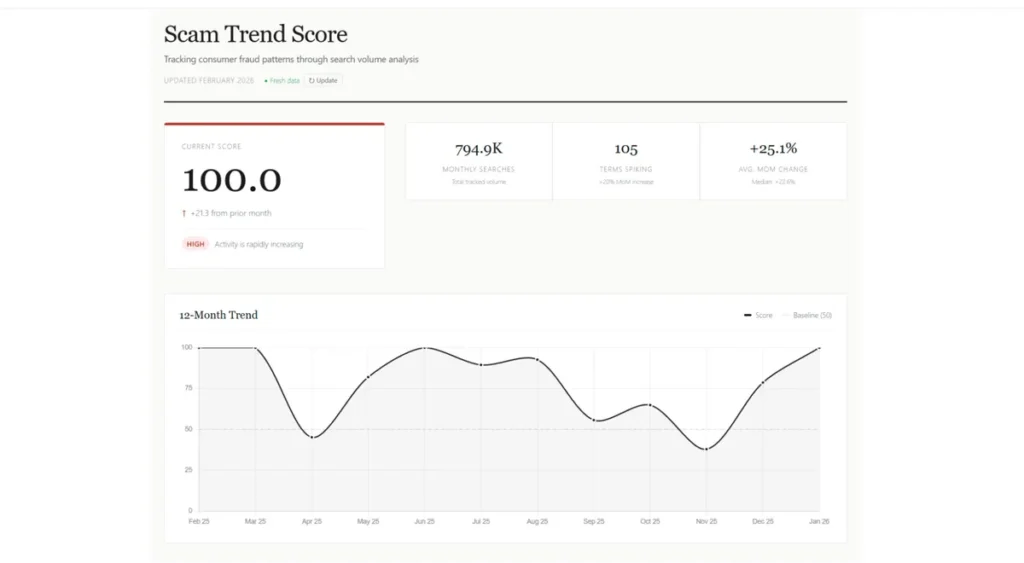
In an era where scams mutate faster than headlines can keep up, the promise of a single number that tracks global fraud momentum sounds almost too good to be true. A rising score that signals trouble ahead. A falling score that suggests the storm is passing. Clean. Objective. Data-driven.
That’s the premise behind Civoryx — a public index designed to measure how attention to fraud shifts across the internet. Its Scam Trend Score aggregates month-over-month changes in search interest across more than 150 fraud-related keywords, weighted by volume to create one composite signal.
No opinions. No speculation. Just data.
But here’s the uncomfortable question: How much can search behavior actually tell us about real-world fraud? And just as important — where might it mislead?
This article takes a skeptical, but fair, look at the reliability of search-based fraud metrics, using Civoryx as a case study. Because when a single number claims to summarize a global problem, it deserves scrutiny.
The Appeal of a Single Fraud Signal
Fraud is notoriously hard to measure. Official statistics lag. Companies guard incident data. Victims often never report losses. In that vacuum, proxy signals — like search behavior — become attractive.
Search data has clear advantages:
- It’s real-time (or close to it)
- It captures consumer intent and concern
- It spans geographies and demographics
- It’s publicly accessible and scalable
If millions of people suddenly search “phishing email” or “bank fraud alert,” something is probably happening. Maybe not a single coordinated attack, but a shift in awareness, exposure, or fear.
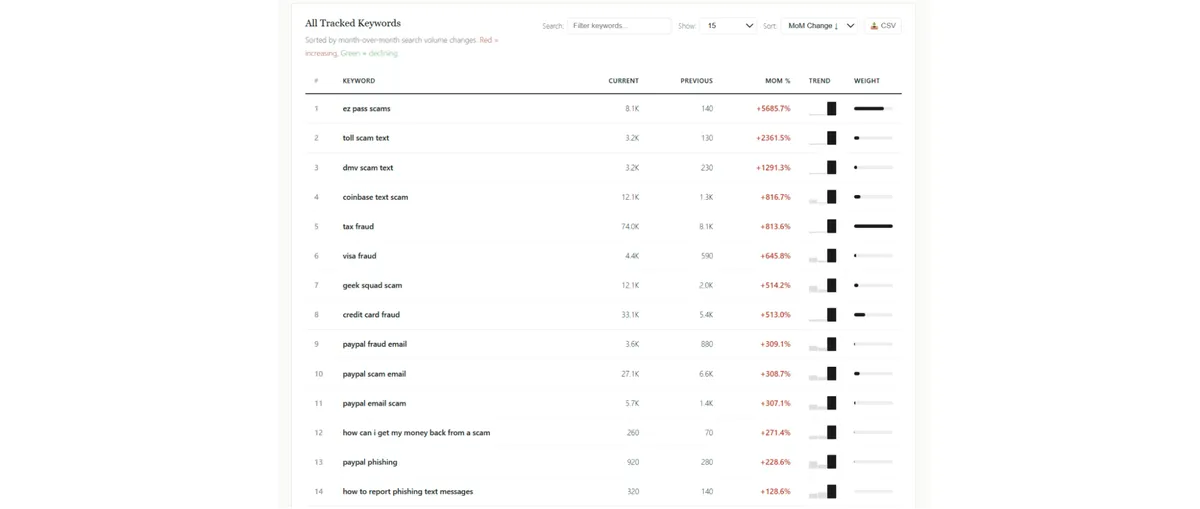
Civoryx leans into this logic. By tracking a curated basket of fraud-related queries — from phishing and identity theft to crypto scams and romance fraud — it attempts to detect momentum changes before they surface in news cycles.
And there’s a compelling origin detail: in 2022, Civoryx expanded its keyword tracking from 80 to 150 fraud terms, a move that significantly broadened the signal’s coverage. In theory, more keywords mean a more representative picture of the fraud conversation online.
But theory and reality don’t always align.
What Search-Based Scores Get Right
Before diving into limitations, it’s worth acknowledging where indices like Civoryx can genuinely shine.
Early Detection of Emerging Themes
Search spikes often precede formal reporting. When a new scam format begins circulating — say a novel payment-app phishing message — people search for explanations long before regulators publish alerts.
A composite score can therefore act as an early warning system, flagging unusual acceleration in fraud curiosity or concern.
Measuring Attention, Not Just Incidents
Fraud isn’t only about how many scams occur. It’s also about how visible and disruptive they feel. Search interest captures the psychological footprint — confusion, fear, urgency — that raw incident counts miss.
Transparency Over Black-Box Models
Unlike proprietary risk scores built from undisclosed data, Civoryx’s methodology is relatively straightforward: track keyword volumes, measure month-over-month change, weight by absolute popularity, aggregate.
You can debate the assumptions, but at least the mechanics are intelligible. In a field crowded with opaque “threat intelligence,” that openness is refreshing.
The Core Problem: Searches Aren’t Scams
Here’s the crux: search data measures attention, not activity. A spike in searches for “crypto scam” could mean:
- A surge in actual fraud
- A viral news story
- A social media panic
- A major platform outage
- A celebrity endorsement gone wrong
Or some combination of all five.
In other words, the Scam Trend Score is a behavioral mirror, not a crime counter. It reflects what people are worried about — which is valuable — but not necessarily what’s happening on the ground.
This distinction is subtle but critical. Confusing attention with incidence is the fastest way to overinterpret any index.
Media Amplification: When Headlines Move the Score
One of the biggest distortions in search-based metrics is media amplification.
Imagine a high-profile fraud case dominates news cycles for a week. Millions of people search related terms, even if they were never directly targeted. The score jumps — not because scams suddenly increased, but because awareness did.
Ironically, this means the index can sometimes rise after a scam has peaked, not before, especially when coverage lags the initial wave.
That doesn’t make the data wrong — it just means the score partly measures the information ecosystem, not just the threat landscape.
Keyword Selection: The Invisible Editorial Layer
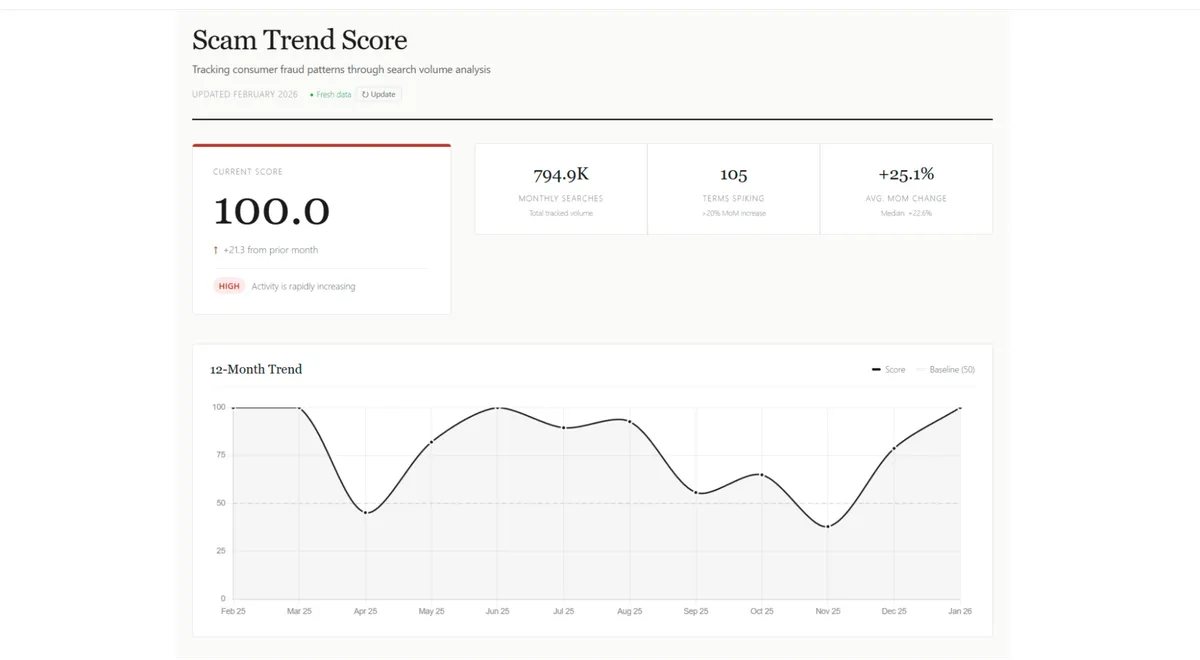
Civoryx emphasizes neutrality: no opinions, just data. Yet every index begins with a human decision — which keywords count.
The choice to track certain terms shapes the narrative. Include more crypto phrases, and crypto volatility influences the score more. Add government-benefit fraud queries, and policy debates might shift the signal.
The 2022 expansion from 80 to 150 keywords likely improved coverage, but it also subtly changed the index’s sensitivity. Any long-term trend analysis has to account for that structural shift — otherwise you risk comparing apples to a larger basket of apples.
This isn’t a flaw unique to Civoryx; it’s inherent to any composite metric. But it’s a reminder that “objective” indices still embed subjective design choices.
Geographic Blind Spots
Global search data isn’t evenly distributed. Regions with lower internet penetration or different search habits contribute less to the signal. That means the “global” trend may lean heavily toward countries where:
- Search engines dominate information seeking
- Fraud awareness campaigns are active
- English-language queries are common
If scam activity surges in areas with limited search visibility, the index might barely move — a silent problem beneath a calm surface.
Behavioral Noise: Curiosity vs. Victimization
Not every fraud-related search comes from a victim or target. Many come from:
- Students researching assignments
- Journalists writing stories
- Professionals monitoring trends
- Curious users following viral posts
This background noise doesn’t invalidate the signal, but it dilutes its direct connection to real harm.
Think of it like measuring flu prevalence by tracking searches for “flu symptoms.” It correlates with outbreaks, but it’s not a diagnostic test.
The Risk of Overinterpretation
Composite scores carry a psychological weight. A single number feels authoritative — even when it compresses messy realities.
For businesses or policymakers, the temptation is strong to treat a rising score as proof of escalating fraud risk. But without corroborating data (incident reports, financial losses, enforcement activity), that leap can be misleading.
Indices are best used as contextual indicators, not standalone evidence.
Where Civoryx Fits in the Data Ecosystem
So is the Global Fraud Index reliable?
The honest answer: it’s reliable for what it measures — attention momentum — but incomplete as a proxy for fraud itself. Think of it as one layer in a broader intelligence stack:
- Search trends → What people are worried about
- Incident reports → What’s being reported
- Financial loss data → What’s causing harm
- Threat intelligence → What attackers are doing
Used together, these perspectives can triangulate reality. Used alone, any single metric risks distortion.
Despite the caveats, there’s something undeniably valuable about a free, public fraud index. Historically, fraud intelligence has lived behind paywalls or inside corporate silos. By making the Scam Trend Score openly accessible — no account, no cost — Civoryx lowers the barrier to awareness.
That matters. Transparency doesn’t eliminate scams, but it democratizes insight. Journalists can spot patterns. Researchers can test hypotheses. Consumers can contextualize headlines.
Conclusion
Search-based fraud scores occupy an awkward but important middle ground. They’re neither definitive nor trivial. They’re signals — imperfect, noisy, but informative.
Civoryx’s Global Fraud Index doesn’t tell you how many scams are happening. It doesn’t identify perpetrators or quantify losses. What it does offer is a real-time pulse of global fraud attention — a way to see when concern is accelerating or cooling.
The danger lies not in the metric itself, but in expecting it to answer questions it was never designed to solve.
So the next time you see a headline declaring fraud is “surging” or “plummeting” based on a single score, pause. Ask what’s really being measured. Attention? Awareness? Fear? Actual crime?
Because in the world of data, the difference between those things isn’t just academic — it’s the line between insight and illusion.